|
Take advantage of this summer! Explore, adventure, investigate and communicate with your child.
Summer is such an awesome time to get caught up and get ahead. So let's get going!
0 Comments
Here are some ideas to try to help your child talk. These are great for those 1 year olds who mostly "point and grunt", because as fun as that stage is...it is really not much fun.
Parent Speech: Use clear simple speech with your child during play routines. The goal is to talk in phrases you want your child to copy – 1 to 2 words. Example: Instead of saying “Go down the hall and get your shoes” say “Get your shoes”. When getting undressed use short phrases “Shoes off…shirt off…etc.” Try to use grammatically correct phrases, just shorter ones. Echo-Expansion Modeling: Add 1 or 2 words to what your child says when you respond back to him or her. Example: When your child says “up” say “up… you want up”. Don’t Anticipate Your Child’s Needs or Wants: Mom's and dad's are great at knowing what their kids want or need. BUT mind-reading doesn't give your child a change to use words and ask. Don’t anticipate your child’s every need or want before they have a chance to make them known to you. Example: When you know your child wants a drink – instead of just handing them the drink, point and wait to see if they will request it (pointing, signing, or saying “drink”). Sabotage the Environment: Mess up routines so your child has to communicate his or her needs. Example: During mealtime give everyone a spoon but “forget” to give your child a spoon. Wait and see if your child initiates they need something. If they don’t initiate what they need, help them by saying. “What do you need?” or “Are you missing something” or “Uh-oh!” Label the item before you give it to them. Play “dumb” when your child points to a desired object. Example: When your child points to the counter for their drink (or another desired object you know they want), say: “What do you want?” (pause) “A spoon?” (pause) “An apple?” (pause) “A drink?” …. “Oh, Drink!” Self-Talk: When your child is within hearing range, talk about what you are doing while you do it. Example: When washing your hands at the sink say “wash hands”, when the phone is ringing say “I hear the phone”. Parallel Talk: When playing with your child, describe what your child is doing while they are doing it. Example: When your child picks up a car – say “pick up car”. When your child drops a block – say “drop block”. Describe what he is seeing and hearing. Example: “That’s a ball”, When listening to music say “Music, listen to music” My advice: take one or two ideas and try them out. Remember when working with kids the idea is not to frustrate them more, but to model how they could do something differently. Waiting for them to talk works wonders...demanding that they talk can really backfire. Try to keep things light and fun and find ways to repeat, repeat, repeat! Any quick search will help you find developmental norms for when kids start to talk...a rough estimate would be starting to use words around a year (no, ball, mama) and starting to combine words around 18 mo - 2 years (more nana, big cup).
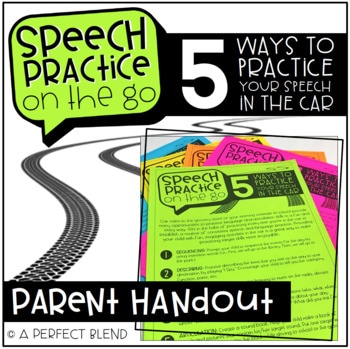
BUT that is a long time of not talking before things get cooking...what should you be watching for in the 12-18 months before your baby really starts talking? I think talking is probably the hardest thing humans learn...look at every other animal on the planet. We are the only ones with an advanced system of communication! Sure some gorillas and monkeys can sign BUT it takes them years of dedicated training to learn what our toddlers pick-up by just hanging out around us. That "hanging out" time that babies and toddlers enjoy is actually a pretty big deal...here are some of the skills they are learning when you think they are just playing around- Attending - babies need to watch to be able to learn, your baby is always watching, the more you baby sees and sticks with the better. Which leads to... Eye Contact - babies learn to focus in on faces SUPER young for a reason, when they see your eyes they start picking up on facial cues, they watch your mouth form sounds, their little brains see you smile and then they can smile back! That whole idea of "I am right here with you!" comes from good eye contact. Object Permanence - babies start to figure out that when they can't see something it still exists, this is when "out of sight, out of mind" doesn't work so great any more...also when "Peek a Boo" becomes a big hit. Mean-End - (tied into cause and effect) - babies start to understand that "If I do..... then this will happen!" This idea is super important for later communication because babies need to get that "If I say... then this will happen". Work with things like pushing buttons, pouring water, pulling string toys. JOINT ATTENTION - my personal big thing I watch for in young kids, this is the whole process of cluing into Mom and making sure she is clued into me. It has two sides, 1) Mom points out something, the kid follows her gesture, and then looks back at Mom 2) The kid looks at (and might point to/hold up) his toy, looks at Mom, and then looks back at his toy as if to say, "Mom, are you watching this?" When kids are not able to use joint attention that is a big red flag for me. Also you want to watch and make sure kids are not just trying to get something they need/want. You need the social aspect of I want to make sure you are enjoying/seeing this with me! Imitation - before babies begin saying words on their own they will imitate the sounds they see you make. Usually imitation comes in these stages: actions, sounds, and then words. I encourage parents to use baby signs once babies start imitating actions, might as well get them communicating as early as possible...and no, using baby signs will not slow down your child's use of words, it actually helps language develop faster! Turn-taking - taking turns is key to good social skills and good language skills. Babies learn turn-taking hand in hand with imitation (Mom does something and then it's my turn!). Work on back and forth interactions because they build great foundations for language! I found this fantastic handout for FREE from A Perfect Blend on teacherspayteachers.com you can pick it up HERE. What a fantastic resource for getting more out of car time. I had a couple of additional ideas that came to mind as I read through Amanda Newsome's handout. I thought I would share my ideas as well. These are strategies that I have learned from my clients and suggested to my clients. Pick one and give it a try!
Articulation Practice -
Language Practice -
Social Skills Work -
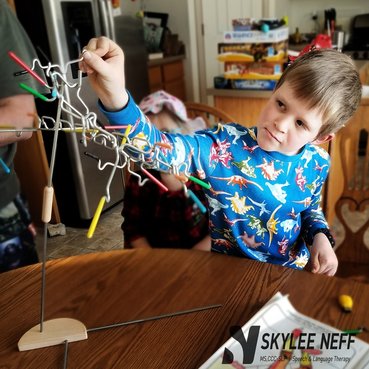
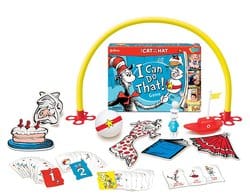
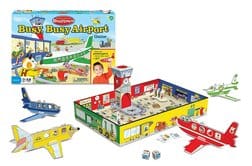
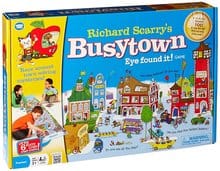
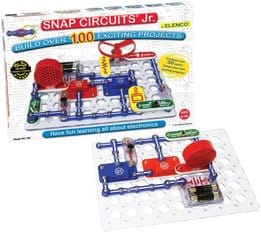
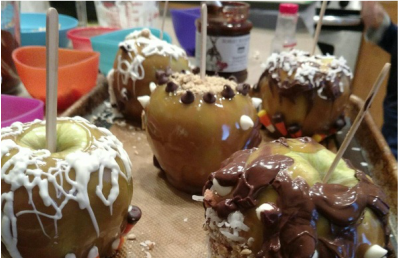
I love using boardgames to add a little variety to my therapy sessions. Games are motivating, promote good social language skills (turn taking, following directions, being a good sport), and can be tweaked to fit speech and language goals if needed. This year I bought a few more additions for my boardgame closet and I thought I would share my new favorites with you. A list of some basic boardgames that I like for speech and langauge can be found HERE. I linked each of these games to Amazon but you can get them at other places. I Can Do That Ages: 4-8 ish Why I love it: -Great for following multi-step directions -Teaches prepositions -Teaches verbs (can be modified for present progressive and past tense) -Gets the kids moving while they are talking! -Great extender for the book "The Cat in the Hat" -Kids love it! *tips to make it better: take out the STOP cards, they are pointless if you are working multi-step drections, also this game is not great for kids with gross motor delays unless you modify it, plus it does have a lot of manipulatives that can be tricky for kids under 3. Suspend Ages: 6+ Why I love it: -Great way to help target easy onsets (fluency) -Good for generic drill (say __ 10x and take a turn) -Slows kids down, makes them think -Problems solving and critical thinking -Interactive play, work together, talk cause and effect -Targets fine motor skills Busy, Busy Airport Ages: 3-7 ish Why I love it: -Fantastic for pretend play -Great for categories (weather, clothes, ect.) -Makeing basic inferences -Gets kids moving -Uses reasoning and problem solving -Good for basic math -Fun pieces and game board *tips to make it better: I took out the little slots at the bottom of the gameboard that are supposed to hold the passengers...it takes FOREVER to put each passenger in a slot at the airport, now we just dump them all in and pick 1 or 2. Also be gentle with the planes, they are just thick cardboard, not plastic...I wish they were a little more sturdy. Busytown, Eye Found It Ages: 3-7 ish Why I love it: -The gameboard is super big! -Builds cooperative play skills -Great to extend into language goals -Find categories, functions, ect. -Good for basic vocabulary and counting -Describing and adding detail *tips to make it better: you can use the timer or not depending on your child's needs Snap Circuits Jr. Ages: 7+ Why I love it: -Cause and Effect -Integrages science with language -Problem Solving -Good for /r/ and /s/ target practice -Following directions -Predicting *this comes in bigger sets but for the sake of a therapy session the Jr. version is perfect. Con: the motor for the fan eats up batteries faster than I like Have I mentioned how awesome holidays are to encourage speech and language? Here are some ideas to get the most mileage out of Halloween in the next few weeks. A bunch of these ideas capitalize on activities you will be doing anyway...why not add a concentrated effort to boost speech and language along the way? Toddlers: Point out decorations and label them - "I see a bat!" "I see a black cat!" "Look, that witch is flying!". Easy first words to practice at this time: Boo! hay, bat, cat, light, whoo (as in owl sound), eyes, nose, mouth, apple, etc. Narrate what you see on walks, while shopping, reading books, or at parties. It never gets old when you're two :) Also most of the following ideas apply to toddlers as well, but keep in mind that toddlers are very young, they learn through play...keep things fun! Pre-School/School Age: Practice the trick-or-treat routine, have the child review with you (great for sequencing). Talk about Halloween night safety and practice making predictions/asking wh questions (ie. What would you do if a house doesn't have it's lights on? Why do we wait until Mom checks our candy before we eat it?) Also practice having your child say thank-you after getting a piece of candy! That is an important social piece of the routine. If speech is a concerns really hammer the sounds in "trick - or - treat" because they can be quite tricky. Other good phrases for speech (particularly k/g sounds): piece of candy corn, decorate the cookie, put a candle in the pumpkin, look at the black cat, Practice saying the name of whatever costume your child will dress-up as, because you know they are going to be asked! Do some Halloween baking! Follow a recipe to work on sequencing, quantities, and problem solving. Discuss what works and what you might change next time. Talk about textures, tastes, smells, and how something looks. Baking is SO GOOD for language development. You could even take pictures of the various steps and then have the child use them to tell a friend about their fun activity (phones make this super easy). Compare/Contrast different Halloween icons, how are a pumpkin and an apple alike, how are they different? How are a bat and a witch alike? How are they different? Explore at the pumpkin patch, on a hike, at the park, on a walk in your neighborhood. There is so much to see, hear, smell, touch, etc. at this time of year. Bombard your child with descriptive language! "Look, that pumpkin is so smooth, but it's stem is super prickly!" "Let's see how many different colors of leaves we can pick up before we get home." "I don't know why leaves get crunchy when the fall off the tree, let's go home and look it up." Think of some "Would you rather?" questions to play with: "Would you rather eat a caramel apple or bob for apples? Would you rather carve a pumpkin or paint a pumpkin?" This post is all about helping kids generalize their language skills using something that all kids love...holidays! Talking about upcoming holidays is a great way to help kids solidify their newfound language skills because:
1. Holidays are super motivating for kids, they are fun! 2. Holidays are very high frequency topics in the weeks proceeding each major holiday. 3. Holiday conversations often are repetitive and predictive...talking about Halloween, well then expect to be asked what you will dress up as, talking about Christmas, expect to be asked what you have asked Santa for, etc. So I take full advantage of the holidays when they roll around. Having a private practice helps because then I don't have to worry about crossing some blurry school vs. church topic line. I ask parents beforehand and go with what they generally talk about. I LOVE working directly with parents. These are some of the big goals that I work on in our conversations: topic maintenance if we are talking about Halloween let's stay there for a few minutes and not jump around to Star Wars or Cars II. conversational turns are we both sharing the talking time, is my client giving answers and asking questions, etc. ability to answer wh-questions and ask wh-questions this is a big one, in therapy it is easy to work on answering wh-questions but harder to find spontaneous opportunities to ask them. The basically scripted holiday conversation routines everyone uses are great for that. eye-contact is the student engaging in appropriate eye-contact, especially when requesting information? and other conversation level grammar and speech sound goals (using correct pronouns, correct helper verbs or conjunctions, verb tenses, /k/ sounds, etc.) and the best part...these are conversations that have a huge likelihood of being taken outside of the therapy session time so the students can practice and apply the skills we have been working on to help them interact with peers. "Good social skills require good communication skills."
- Candy Lawson at the Center For Development and Learning. Getting ready for school requires practicing more than just academic skills. A huge factor in a child's success is how well he interacts with others. When thinking about how your child will perform at school remember to think about more than the spelling tests and math grades...the "social skills tests" your child will face are important too. Often kids are expected to know these skills without being taught them. It is a good idea to take time and explicitly teach social skills, especially for the kids who need a little extra help. Here are some social skills that are super important but that are often overlooked: 1. Greetings 2. Initiating a Conversation 3. Listening to Others 4. Taking Turns in a Conversation 5. Being Responsible for your Behavior 6. Problem-Solving Through Conflicts 7. Apologizing 8. Asking for Help 9. Ignoring Distractions 10. Staying on Topic in a Conversation Parents and teachers can work together to determine if a child needs extra help learning to use social skills. Many kids pick up social skills without needing to be taught outright, but it is important not to assume that all children will. Parents can model social skills during conversations at home, role-play scenarios that may be difficult at school, or look for opportunities for their children to practice needed social skills. Teachers can reinforce skills during group activities, praise and reinforce children during the day, and be alert to refer children to a speech and language pathologist should additional support be required. Resources: Top 10 Social Skills Students Need to Succeed Social Skills and School Talk with your child's SLP
Ok, so this post is more of a soap box stand than anything else. It will be short. A few weeks ago I was at my kid's parent teacher conferences and as we were leaving, at the end of the night, we walked by the school SLP's room. She was sitting at her desk ALL ALONE. I asked her how many parents she had seen that night...four. Out of a caseload of nearly 70 kids, she had only seen 4 parents! I remembered having the exact same experiences and feeling SO frustrated! Now that I provide private therapy I get totally spoiled because I get to talk with my client's parents every session. I get to show them exactly what I am doing, why I am doing it, and teach them how to practice the same principles at home. And I see tons of progress. In the schools I did everything I could to include parents, but I was BUSY! I saw so many kids, I couldn't possibly e-mail each one's parents at the end of every session with an update. During parent teacher conferences I set aside hours for two days just to talk with parents...who would forget to stop by. I know we are all busy, and I know that it can be hard to just get to parent teacher conferences and see each kid's main teacher, it is easy to overlook the SLP. But if your child qualified to receive speech therapy at school that means your child has a disability or delay that impacts their academic success. Your SLP is working hard to help your child...next time GO SEE THEM when you have the chance! "Horton Hears a Who" Speech and Language Therapy Ideas
Using books as a jumping point for language activities is vital to good speech and language therapy. Here are some ways to encourage kids to engage with literature. Activities for young children: 1) "read" the book (look at pictures, read some of your favorite rhyming parts, talk about emotions), I rarely read all of the words in long Dr. Seuss books with young kids, but that doesn't mean we don't interact with the pages and learn about the story. 2) have your child point out different animals or actions they see on the pages, then act them out together. For example: Horton is an elephant: Stomp around the room like a big elephant. Touch your ears and listen really hard like you have big elephant ears. Kangaroos: Jump...what are we going to do? Jump! what are we doing? Jumping! Monkeys: wave their arms, Eagles: fly, Whos: bang on drums, toot trumpets, etc. *This is a great way to practice action words and verb tenses and complete sentences. Also anything that gets little kids moving AND reading books is a win-win! 3) use the idea of the Whos talking so quietly and then making music to be loud and arttact attention to work on describer words and comparatives. Make/use some kidsinstruments and practice loud/soft, fast/slow For example: I had some shakers and a little xylophone set, we practiced playing along with picture cue cards, I cued for "we are playing loud!" let's play softer...ok, now you want to play...Louder! This also extended into drumming on the table and walking around the house (slowly, quickly, softly, loudly) 4) visit seussville.com for an awesome colorsheet of Horton Activities for Older Children 1) read through the book together, point out the different emotions Horton feels (confused, surprised, overwhelmed, hopeless, worried, etc.). There are tons of other great things you can point out as well, go with what your child seems interested in. 2) create Venn Diagrams for Horton vs. the Whos or Horton vs. Kangaroo (that is the map that has two big empty circles that overlap in the middle). After the map is complete you can talk more about how the two are similar and how they are different. Maybe follow-up with some what-if questions...what if Horton had ears like the kangaroo? etc. 3) visit seussville.com for activity sheets about helping others and doing good deeds (they have a nice writing activity where you write a note to Horton telling him about a good deed you have done). 4) visit seussville.com and check out the activity where your child thinks of animals in the Jungle of Nool (or any jungle) and then you ask questions trying to guess which one they are thinking of (ex. does it fly? does it have a long trunk? does it have fur?) 5) extend activity #4 into a simile and metaphor discussion: what if I said someone was as "sour as a kangaroo?" as "helpful as Horton", as brave as a lion, felt small as a Who...wolfed down their meal, a busy bee. 6) extend activity #5 into a Describe It game...I am thinking of an animal that sounds like...looks like...eats... practice guessing and giving clues to help build semantic connections. There is SO MUCH you can do with this book. These games have been a huge hit with my clients. Give them a try! I love Dr. Seuss because his books are a great jumping point for so many different language goals. Enjoy Dr. Seuss Day :) |


RSS Feed